CNC Milling and Turning: Precision Manufacturing for Industrial Applications
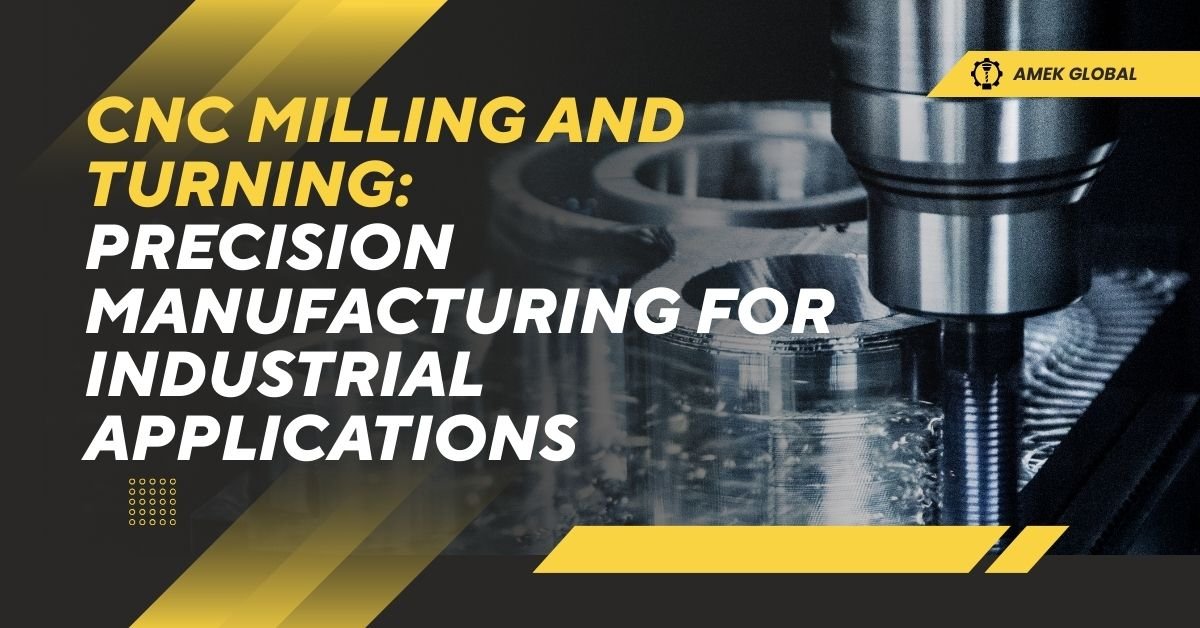
CNC milling and turning are two of the most important machining processes used in modern manufacturing. Together, they form the backbone of precision engineering for industries such as mining, construction, automotive, and heavy equipment manufacturing. As global demand grows for high-accuracy components, CNC milling and turning continue to replace conventional machining methods.
Manufacturers supplying to markets like Australia, Canada, the United States, Europe, and South America rely on CNC milling and turning to meet strict quality standards, reduce production errors, and ensure repeatability.
Understanding CNC Milling and Turning
CNC milling and turning are computer-controlled machining processes that shape metal components based on programmed instructions.
CNC turning is used to produce cylindrical or round components. In this process, the workpiece rotates while cutting tools remove material to achieve precise diameters, grooves, and finishes. Turning is commonly used for shafts, bushings, flanges, and fasteners.
CNC milling involves a rotating cutting tool that removes material from a stationary workpiece. Milling is ideal for creating flat surfaces, slots, holes, and complex geometries. Advanced multi-axis CNC milling machines allow for high precision even in intricate designs.
Key Differences Between CNC Milling and Turning
While both processes are essential, they serve different manufacturing needs.
CNC turning is best suited for symmetrical, round parts and high-volume production. It offers excellent surface finishes and dimensional consistency.
CNC milling is more flexible and is used for complex shapes and non-cylindrical components. Milling enables manufacturers to produce custom features that would be difficult or impossible with turning alone.
By combining CNC milling and turning, manufacturers can deliver fully machined components with minimal secondary operations.
Benefits of CNC Milling and Turning
CNC milling and turning offer several advantages over traditional machining methods:
High accuracy and tight tolerances
Consistent quality across production batches
Faster production cycles
Reduced material waste
Ability to machine complex components
These benefits make CNC machining ideal for industries where performance, safety, and reliability are critical.
Materials Used in CNC Milling and Turning
CNC milling and turning support a wide range of materials, allowing manufacturers to meet diverse industrial requirements.
Common materials include carbon steel, alloy steel, stainless steel, aluminium alloys, and hot rolled steel bars. Material selection depends on strength requirements, corrosion resistance, machinability, and compliance with ASTM and international standards.
Using the correct material ensures long service life and reliable performance in demanding environments.
Applications Across Industries
CNC milling and turning are widely used across industrial sectors, including:
Mining and tunneling equipment
Automotive and transportation systems
Construction and infrastructure projects
Energy and industrial machinery
Components such as custom flanges, forged shafts, anchor bolts, and structural parts depend on CNC machining for precise fitment and durability.
Quality Control and Global Standards
For international supply, quality assurance is essential. CNC milling and turning processes are supported by ISO-certified systems, in-process inspections, and final dimensional checks.
Compliance with ASTM standards ensures materials and finished components meet global requirements. Third-party inspections and test reports provide additional confidence for overseas buyers.
Why Choose Amek Global
Amek Global offers advanced CNC milling and turning capabilities supported by experienced engineers and modern machinery. With a strong focus on quality, customization, and global compliance, the company supplies precision-machined components to clients across Australia, North America, Europe, and South America.
By combining CNC machining expertise with forging partnerships and strict quality control, Amek Global delivers dependable solutions for demanding industrial applications.
Conclusion
CNC milling and turning are essential processes for producing high-quality precision components. Their ability to deliver accuracy, efficiency, and consistency makes them indispensable for global industries.
Choosing the right CNC machining partner ensures reliable performance, compliance, and long-term value for industrial projects worldwide.