Grinding Media Balls: Performance-Driven Solutions for Mining and Industrial Applications
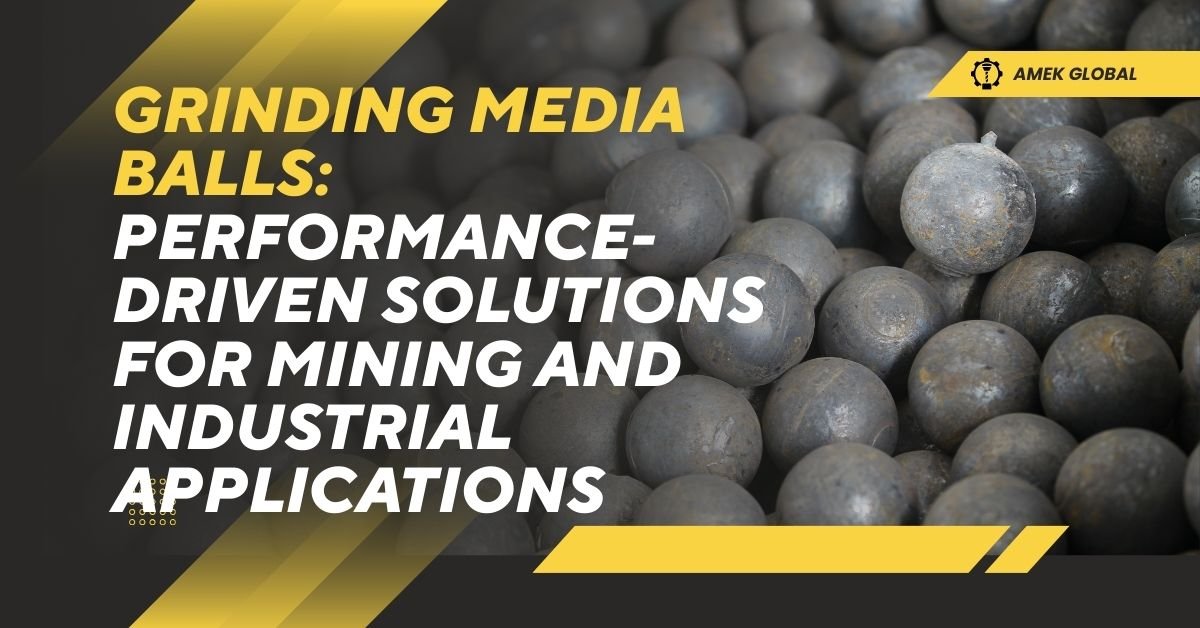
Grinding media balls play a critical role in mineral processing, mining, and cement industries. Used inside grinding mills, these balls are responsible for breaking down raw materials into fine particles. Their quality directly impacts grinding efficiency, energy consumption, and overall operational cost.
As global mining operations expand across regions such as Australia, Canada, South America, and Africa, the demand for high-performance grinding media balls continues to grow.
What Are Grinding Media Balls?
Grinding media balls are spherical steel components used in ball mills and grinding mills to crush and grind materials such as ores, minerals, clinker, and coal. As the mill rotates, the balls impact and grind the material into finer particles.
The effectiveness of grinding media balls depends on their hardness, toughness, size consistency, and resistance to wear. Poor-quality grinding media can lead to excessive wear, uneven grinding, and increased downtime.
Importance of Quality in Grinding Media Balls
In high-impact and abrasive environments, grinding media balls must maintain their shape and hardness over extended operational cycles. High-quality grinding media improves grinding efficiency and reduces replacement frequency.
Key performance benefits include:
Uniform hardness for consistent grinding
High impact resistance to prevent breakage
Low wear rate for extended service life
Reduced energy consumption in grinding mills
Selecting the right grinding media balls directly influences production output and cost control.
Manufacturing Process of Grinding Media Balls
Grinding media balls are typically manufactured using forging or casting processes, followed by heat treatment to achieve the required hardness and microstructure.
Forged grinding media balls are preferred for demanding mining applications due to their superior strength and structural integrity. Controlled heat treatment ensures uniform hardness throughout the ball, reducing the risk of surface cracking and breakage.
Precision manufacturing and strict quality checks are essential to ensure consistency across batches.
Materials Used in Grinding Media Balls
Grinding media balls are commonly produced using high-quality carbon steel and alloy steel grades. Material composition is carefully selected to balance hardness and toughness.
ASTM-compliant steel grades are widely used to ensure predictable performance under heavy impact and abrasive conditions. Proper material selection helps maintain optimal grinding efficiency while minimizing wear on milling equipment.
Quality Control and Testing
Quality assurance is a critical part of grinding media ball manufacturing. Manufacturers conduct hardness testing, impact testing, chemical analysis, and dimensional checks to ensure performance reliability.
Third-party inspections and material test certificates provide additional assurance for international buyers. Consistent quality control reduces the risk of unexpected failures during mill operation.
Applications Across Industries
Grinding media balls are widely used in:
Mining and mineral processing plants
Cement and clinker grinding units
Power generation and coal grinding
Industrial material processing
Their role is essential in achieving uniform particle size and efficient material processing across industries.
Conclusion
Grinding media balls are a vital component in milling and material processing operations. Their quality directly affects grinding efficiency, operational cost, and equipment life.
Choosing a trusted grinding media ball manufacturer ensures consistent performance and long-term reliability for mining and industrial applications worldwide.