CNC Precision Components: Manufacturing Excellence for Global Industries
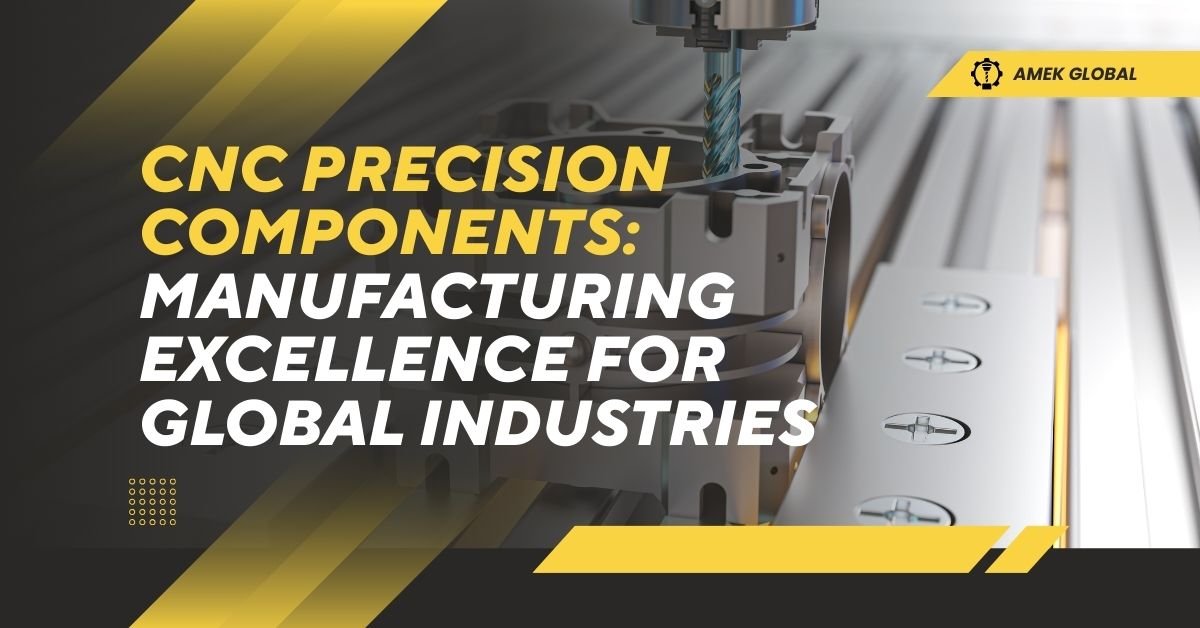
Precision is the foundation of modern industrial manufacturing. Across mining, construction, automotive, and heavy engineering sectors, CNC precision components ensure machinery performs reliably under demanding conditions. As global industries move toward stricter quality standards and tighter tolerances, CNC machining has become the preferred manufacturing method for critical components.
Industries in Australia, Canada, the United States, Europe, and South America depend on CNC precision components to maintain consistency, safety, and operational efficiency across projects.
What Are CNC Precision Components?
CNC precision components are manufactured using Computer Numerical Control machines that follow programmed instructions to shape metal with high accuracy. This automated process eliminates manual variability and ensures repeatable results across large production volumes.
These components are widely used where exact dimensions, strength, and durability are essential. Common CNC precision components include flanges, shafts, fasteners, structural parts, and custom-engineered mechanical components.
Importance of CNC Precision Components
Industrial equipment operates under high loads, vibration, and continuous use. CNC precision components are designed to withstand these conditions while maintaining performance over time.
Key benefits include:
High dimensional accuracy
Consistent quality across batches
Improved surface finish
Reduced material waste
Compliance with international standards
For global buyers, precision machining reduces equipment failure, downtime, and maintenance costs.
CNC Milling and Turning in Manufacturing
CNC milling and turning are essential processes used in precision component manufacturing.
CNC turning is commonly used for cylindrical parts such as shafts and custom flanges. The workpiece rotates while cutting tools shape it to exact specifications.
CNC milling allows manufacturers to produce complex shapes, slots, and holes with precision. Modern multi-axis CNC machines improve efficiency and accuracy while reducing setup time.
Together, CNC milling and turning enable manufacturers to meet a wide range of industrial requirements with consistency.
Materials Used in CNC Precision Components
Choosing the right material is critical for component performance. CNC precision components are manufactured using various metals and alloys based on application needs.
Common materials include carbon steel, alloy steel, stainless steel, aluminium alloys, and hot rolled steel bars. Each material offers specific advantages in strength, corrosion resistance, and machinability while meeting ASTM and international standards.
Customization and Quality Assurance
CNC machining allows complete customization based on client drawings and technical specifications. Custom CNC precision components improve equipment compatibility and operational efficiency, especially in mining and infrastructure projects.
Quality assurance is central to precision manufacturing. ISO-certified systems, material traceability, dimensional inspection, and third-party testing ensure components meet global quality benchmarks.
Applications Across Industries
CNC precision components are used in mining, construction, automotive, energy, and industrial equipment manufacturing. Components such as forged shafts, anchor bolts, grinding media, and structural parts support critical operations worldwide.
Why Choose Amek Global
Amek Global is a trusted manufacturer of CNC precision components with advanced machining capabilities and strong forging partnerships. Serving clients across Australia, North America, Europe, and South America, the company delivers reliable, ASTM-compliant components tailored to global industrial needs.
Conclusion
CNC precision components are essential for industries that demand accuracy, strength, and reliability. Partnering with an experienced manufacturer ensures consistent quality and long-term performance for global projects.